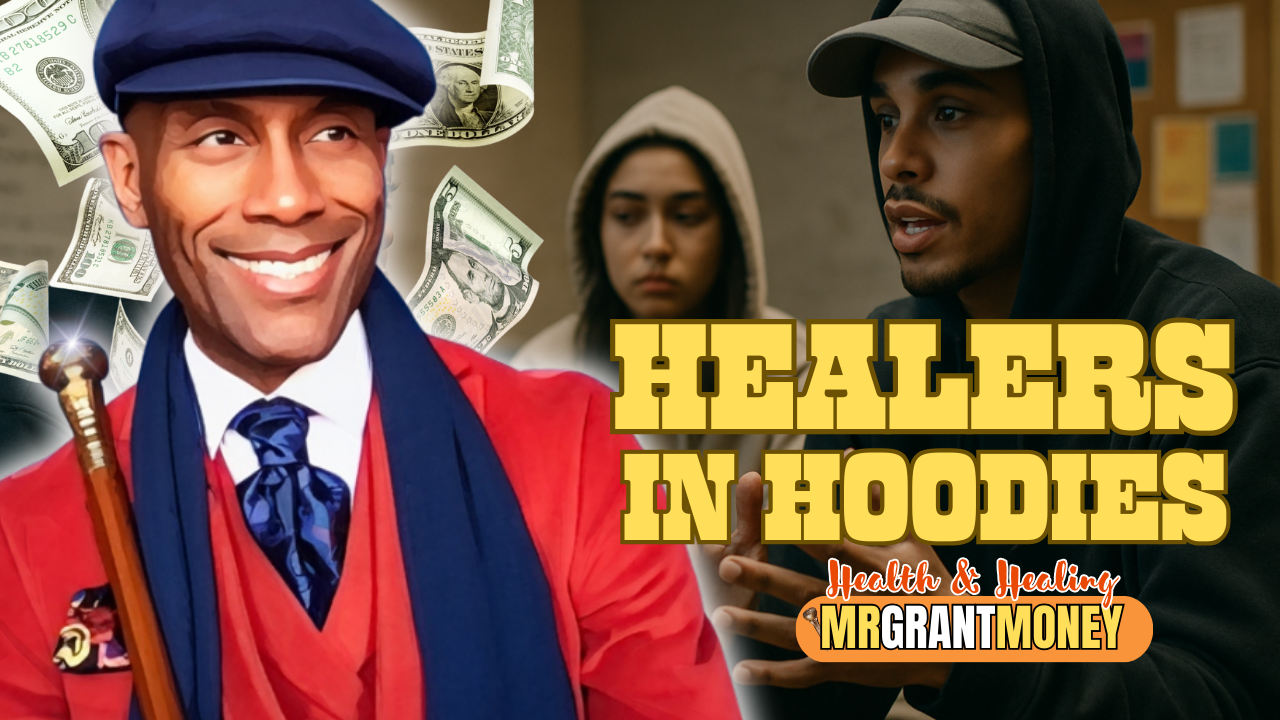
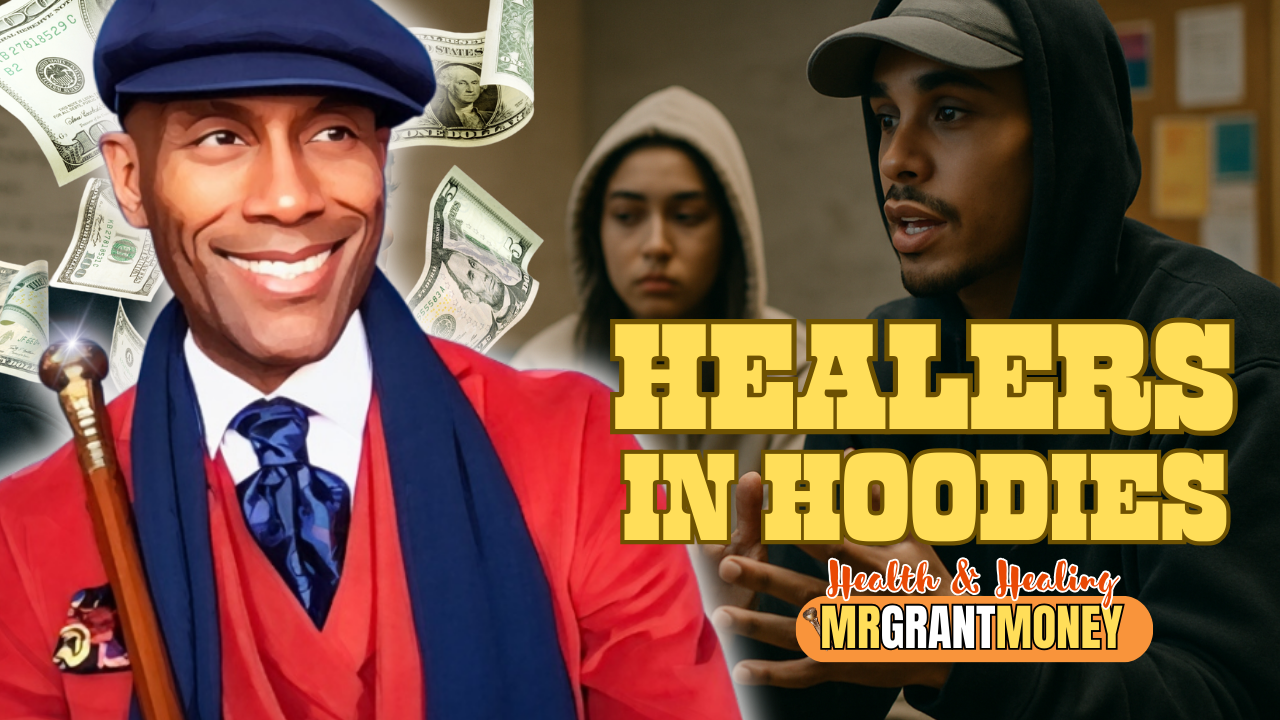
Healers in Hoodies: Mr. Grant Money & the Peer Counselors of South Bronx
 Fri, Sept 19
“We Been Knew: Peer-Led Mental Health Justice in the South Bronx”
🕯️ First, They Took Jahlil.
He was 17. Class clown. Beatmaker. Secret poet. He didn’t make it to graduation—not because he dropped out, but because the system dropped him.
Jahlil lived with anxiety, grief, and no space to process it. He asked for help and got labeled “defiant.” He missed therapy appointments because he worked to help at home. By the time he reached a clinic, the form asked about insurance before asking if he was safe.
Two weeks later, he was gone.
His friends didn’t post think pieces.
They built a movement.
🧢 The Ones Who Didn’t Get the Help—So They Became It
They called themselves The Hood Healers—not therapists, not social workers. Just youth from the South Bronx who knew what it meant to survive and decided to do more than survive.
It started in the Mitchel Houses basement. Healing circles, snacks, and something stronger: proximity and trust.
Tamia (20): Lost her brother to violence, now runs youth grief circles.
Jorge (18): Kicked out for panic attacks, now trains youth in trauma awareness.
Auntie Lala (63): A retired psych nurse and the spacekeeper—candles, boundaries, energy checks.
They built a blueprint for healing:
-
Peer counseling, trauma-informed and community-rooted
-
Pop-ups in bodegas, basketball courts, and barbershops
-
Digital support via IG DMs, healing hotlines, and voice notes
-
Healing kits with sage, affirmations, and hotline numbers—tucked in Crown Royal bags
This wasn’t a program. It was survival—shared, structured, sacred.
🕶️ The Strategist Who Knew What the City Missed
Mr. Grant Money heard the whisper:
“These kids built what the city couldn’t.”
He watched a healing circle unfold in a rec room. A 14-year-old described wanting to disappear. A 19-year-old hugged him and said, “You're not crazy—you’re hurt.”
Mr. Grant Money turned to his notebook and wrote one word in bold:
PROXIMITY.
📄 The Proposal That Punched Through the Ivory Tower
The pitch was raw. Real. Strategic.
📊 The numbers:
-
Bronx youth = 5x more likely to experience PTSD than their suburban peers
-
63% of participants said the program stopped them from self-harming
-
42% had never accessed any formal mental health services before
🧠 The framing:
Not “community outreach.”
Not “urban resilience.”
But a peer-led, trauma-informed, culturally grounded mental health ecosystem.
Built by survivors. Funded for the future.
He titled it:
“We Been Knew: Peer-Led Mental Health Justice in the South Bronx.”
And the clincher?
A voice note from Tamia:
“We didn’t start this for funding. We started it ’cause nobody else came.”
💸 The Hood Got Funded
$2.75 million in total grants:
-
🌱 $650K from Ford Foundation’s Youth Wellness Innovation Fund
-
🎤 $400K from a Bronx-born rapper’s foundation (“I wish they had this when I was 15”)
It unlocked:
-
A full-time healing hub, open 6 days/week
-
Peer Counselor Fellowships with stipends + certifications
-
Mobile mental health carts—pulling up to block parties with Narcan, snacks, affirmations, and safe space
-
An underground podcast for raw youth mental health conversations—with beats
🧠 Impact:
4,500+ youth served
Zero suicides reported among participants in the first year
Tamia hired by NYC Dept. of Health to co-lead youth trauma reform
She wears her hoodie to every meeting
🧠 Mr. Grant Money’s South Bronx Grant Gospel
Straight from the street to the strategy room:
-
Credibility > credentials. If you want to reach youth, fund the ones who are youth.
-
Peer care isn’t soft—it’s scalable. Fewer costs, deeper trust, faster reach.
-
Real healing is messy. Show the chaos and the care.
-
Don’t wait for systems to act. Fund those who already did.
-
Lived experience isn’t an anecdote—it’s a credential. Pay the experts who’ve lived the pain.
“The Hood didn’t just get healed—they got funded. And that might save the next Jahlil.”
💬 Discussion Questions
-
How does peer-led mental health support shift power and access?
-
What systems failed Jahlil—and how could this grant change that story for others?
-
What makes youth-designed models more responsive than traditional top-down interventions?
-
How should funders value lived experience versus formal credentials?
-
What would peer-powered healing look like in your neighborhood?
🔓 UNLOCK EXCLUSIVE TIPS WITH MR. GRANT MONEY!
We hate SPAM. We will never sell your information, for any reason.