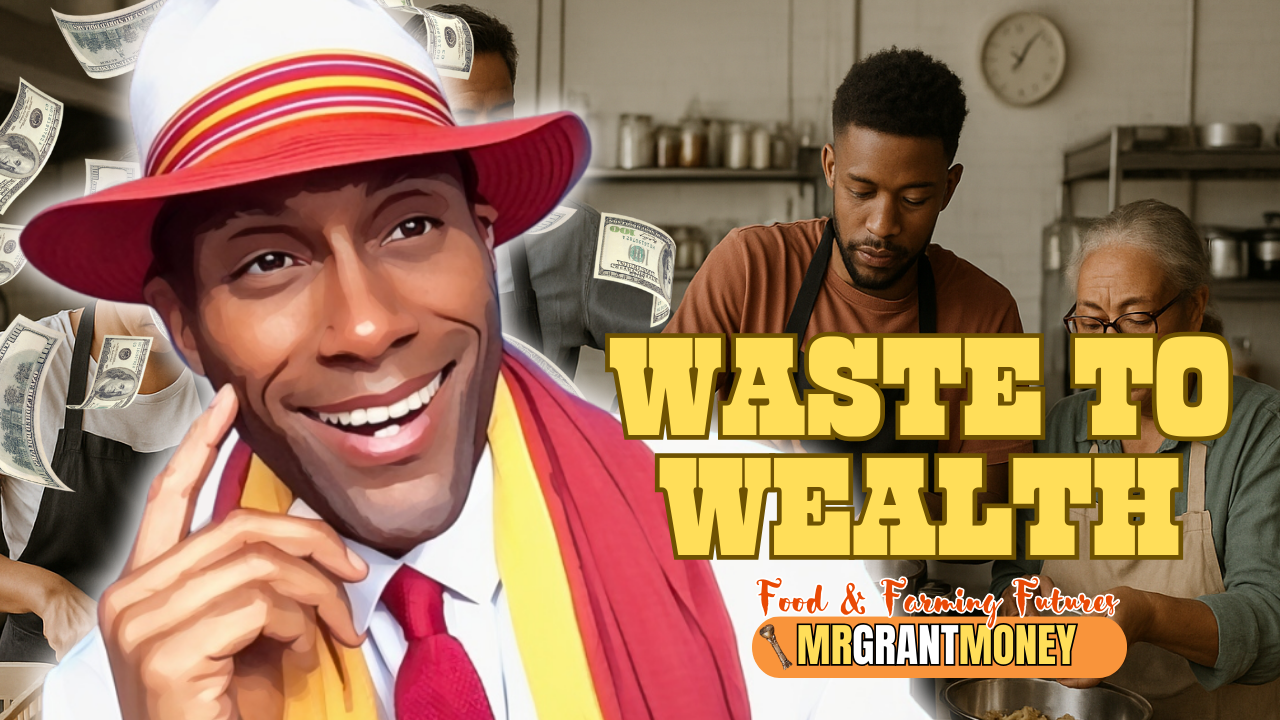
From Waste to Wealth: Mr. Grant Money & the Zero Waste Kitchen in San Francisco
 📅 Fri, Nov 14
🍞 Alondra Used to Cry in the Walk-In Fridge
Not from the cold. From the guilt.
She’d plate $60 duck confit for execs, then take home half-loaves of bread bound for the trash. Not stolen—saved.
Meanwhile, her teenage son would ask,
“Did you eat today?”
She’d lie.
In a city that can DoorDash caviar at midnight, hunger hides behind Michelin stars—and food shame becomes policy failure.
🍽️ Hunger at the Heart of a Supermarket Capital
San Francisco markets itself as a foodie utopia.
Organic. Ethical. Farm-to-table.
But 40% of the city’s waste stream is edible food.
1 in 4 residents faces food insecurity.
-
In Bayview: liquor stores outnumber produce aisles
-
In the Tenderloin: frozen meals replace fresh groceries
-
Across SoMa: artisan kale tossed because it wilted
This isn’t a food shortage.
It’s a justice short circuit.
🥄 The Underground Table That Refused to Disappear
Alondra wasn’t alone.
-
Malik, a baker who learned to proof dough in prison
-
Mei, a fermentation nerd from Chinatown
-
Tyrese, a group home chef turned resource magician
They formed The Revival Table—a zero-waste, memory-rich collective turning trash into tradition.
They ran Ghost Kitchens out of:
-
Abandoned storefronts
-
Church basements
-
Sidewalks
They fed communities with flavor and ferocity.
But burnout loomed. Regulations hovered. And they needed structure.
🧾 Enter: Mr. Grant Money—With Grit, Metrics, and a Notepad
No cape, just clarity. And a proven playbook.
I tasted their oxtail stew. I read their napkin budgets.
And I saw the bones of a movement kitchen:
-
🍅 Food rescue from local farms and grocers
-
👩🏽🍳 Job training for justice-impacted youth and elders
-
🍲 Culturally rooted meals on a pay-what-you-can model
-
♻️ Waste diversion as climate justice
-
🏢 A teaching kitchen and resilience hub in one
It was bold. It was doable. It was fundable.
📄 Cooking Up a Proposal with Power and Proof
We spoke three languages: funder, community, and movement.
📈 Translate Mission into Metrics
Pounds diverted. Emissions reduced. Meals served. Apprentices trained.
But always, always: stories first.
🧠 Reframe as Infrastructure
This wasn’t charity. This was:
-
Workforce development
-
Public health
-
Resilience infrastructure
💬 Let Lives Be the Logic Model
-
Alondra’s meal logs
-
Malik’s reentry journey
-
Tyrese’s recipe journals
🌎 Align With Climate + Equity
We tapped into:
-
California methane mandates
-
USDA urban ag pilots
🎯 Grant Stack: What We Went After
-
USDA Urban Agriculture & Innovative Production Grant
-
EPA Environmental Justice Small Grants
-
CalRecycle Waste Prevention & Rescue
-
Private funding for culinary entrepreneurship & reentry
💸 When the Check Cleared, the Kitchen Lit Up
-
✅ $220K from USDA
-
✅ $150K from EPA
-
✅ $80K city match
What it funded:
-
⚡️ A Zero Waste Kitchen in SoMa with solar panels, cold storage, compost tech
-
🍴 A culinary certification pipeline
-
🧑🏽🍳 18 full-time jobs in Year 1
-
💃🏽 “Comida de la Revolución” cultural cooking nights led by elders
They now sell zero-waste spice blends at co-ops.
Graduates land jobs at Michelin-starred kitchens.
And the community eats meals made from ingredients the system once tossed.
🧠 Mr. Grant Money’s Takeaway Toolkit
🧤 “Food justice isn’t charity—it’s economic liberation.”
Design your project as an enterprise, not a band-aid.
Fund systems, not side projects.
🥕 “Don’t just reduce waste—restore dignity.”
Make your proposal about people as assets, not just inputs and outputs.
📚 “Proposals are policy tools.”
You’re building a movement narrative in Excel cells. Use it wisely.
🔥 “The messier the origin story, the stronger the impact.”
Don’t sanitize. Show the struggle. That’s the source of trust.
📝 “Your community is your co-author.”
Let your people define the language. The funder will follow authenticity.
💬 Discussion Questions for Your Movement Table
-
What could your community build if food waste was treated as a resource, not a burden?
-
How can zero-waste kitchens be reframed as cultural and employment centers—not just environmental solutions?
-
What policies in your city protect “aesthetic standards” over access—and how can you challenge them?
-
How should justice-impacted lives shape new models of food equity?
-
How can funders become co-conspirators, not gatekeepers, in the food justice movement?
🔓 UNLOCK EXCLUSIVE TIPS WITH MR. GRANT MONEY!
We hate SPAM. We will never sell your information, for any reason.