Dance for Dignity: Mr. Grant Money & the Refugee Ballet Troupe in Jordan
 Wed, Oct 22
The Moment Before the Leap
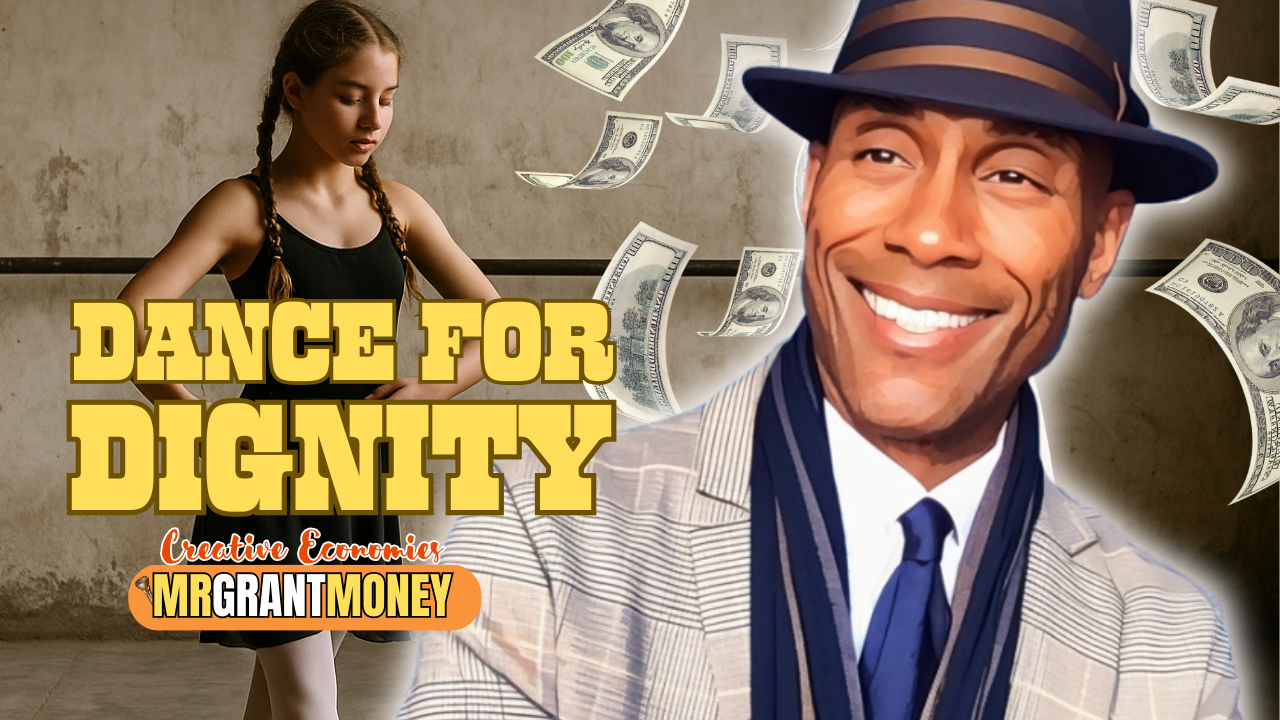
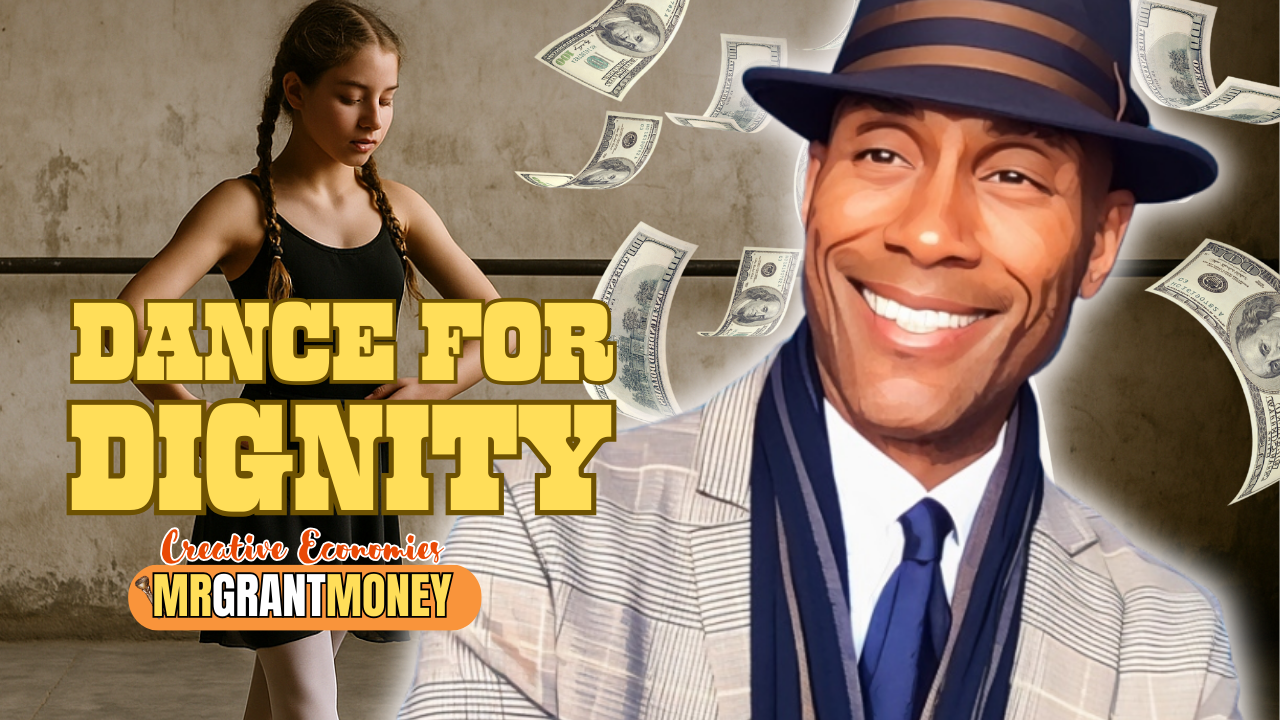
I stood at the edge of an old rehearsal room in Amman, watching a girl with ash-blonde braids poised en pointe—on bare concrete. No mirrors. No marley flooring. Just chalk lines, resilience, and raw muscle memory. Outside: the dust of a displaced nation. Inside: grace, defiant and deliberate.
She whispered something to herself before she danced.
I asked her later what it was.
“A promise,” she said. “To remember who I am—even when the world forgets.”
And just like that, I knew: this wasn’t about dance.
This was about dignity.
🎭 When Art Becomes a Refuge
Za’atari and Azraq. To most, those are refugee camps in Jordan. To me? They’re pressure cookers of forgotten brilliance. Over 120,000 Syrians live between them—whole childhoods unfolding behind barbed wire. The trauma is chronic, the opportunities microscopic.
Education is patchy. Employment’s a gamble. But creative talent? Overflowing.
Girls choreographing to Beyoncé on borrowed Bluetooth speakers. Boys teaching themselves cinematography on cracked Androids. Elders retelling epic poems under plastic tents. And in the middle of it all: the Refugee Ballet Troupe—formed by a rogue group of displaced Syrian dancers led by the indomitable Leila Mansour.
She was once a principal dancer in Damascus. Now? She teaches pirouettes in tents and conducts trauma-informed movement therapy in shelters. Her dream? A fully resourced dance academy run by, and for, displaced youth.
Not charity. Power.
Not escape. Expression.
🧵 The Dreamers Who Wouldn’t Stay Small
Leila wasn’t alone. There was Khaled, the costume designer who stitches tutus from aid-package linens and moonlights as a DJ to fund supplies. Yara, a 15-year-old choreographer whose first composition went viral on TikTok in three languages. And Reem, a Palestinian-Jordanian therapist who integrates somatic healing with dance instruction.
Together, they had everything but one thing: funding.
They’d been turned down by two dozen donors. “Too niche.” “Too risky.” “Not enough impact data.” The rejections piled up.
Then someone whispered my name.
🎩 Enter Mr. Grant Money, Stage Left
Now, I don’t usually wade into war zones of doubt. But this one called me. And when I say “called,” I mean it literally. A WhatsApp message from an old contact at UNESCO:
“There’s a dance revolution happening in Jordan. Quiet, fierce. Thought you’d want to see it.”
I booked a flight within hours.
What I saw in Za’atari stopped me cold. Not just the technique—though that was world-class—but the transformation. Shy girls shedding shame. Boys rebuilding trust in their bodies. Whole families gathering to watch performances like sacred rituals.
This wasn’t “arts programming.” This was soul infrastructure.
🖋️ Crafting a Proposal with Pirouettes and Proof
I got to work.
Step 1: Reframe the pitch.
Not a ballet program. A Creative Resilience Ecosystem. Funders love ecosystems—especially ones doing triple-duty: mental health, youth leadership, and cultural preservation.
Step 2: Pull the receipts.
-
Somatic therapy reducing PTSD in conflict zones
-
UN data: arts increase school retention for refugee girls by 40%
-
Harvard stat: movement-based healing outperforms talk therapy for trauma recovery
Step 3: Mix the money.
A cross-sector cocktail of funders:
-
The Ford Foundation’s Creativity & Free Expression grant
-
Arab Fund for Arts and Culture
-
UNHCR’s Youth Participation Fund
-
A Paris-based fashion house (yes, really) focused on arts diplomacy
The proposal title?
“Dance for Dignity: A Scalable Model of Movement-Led Refugee Resilience”
Opening line?
“I dance so the war doesn’t win.” — Yara, age 15
🏛️ The Curtain Rises
Three months later, the money hit.
💸 $2.4 million in multiyear, flexible funding. Enough to:
-
Renovate a training center in Amman with sprung floors and a digital recording suite
-
Hire four full-time instructors and two trauma specialists
-
Launch a mobile stage to tour camps and cities
-
Fund stipends and mentorships for youth choreographers
-
Produce a docuseries by refugee filmmakers on the troupe’s evolution
The troupe performed their first professional recital at Amman’s National Theater.
Standing ovation.
Yara wept in the wings.
Leila bowed in defiance.
Next stop? An international tour: Berlin, Toronto, Cape Town.
🎨 Mr. Grant Money’s Encore Tips
Here’s what this win taught us—and how you can bring it home:
1. Stop underselling “soft power.”
Art is infrastructure. Package it as a multiplier of equity, not a feel-good bonus.
2. Use global case studies.
Funders love local heart with international data. Quote the UN. Cite the Harvard research.
3. Language matters more than logos.
“Trauma-informed movement” > “ballet class.” “Youth incubator” > “art camp.”
It’s not spin—it’s strategy.
4. Let your community lead.
Leila and Yara weren’t tokens. They were the storytellers, strategists, stars.
Fund that.
5. Story is your strongest currency.
Data earns respect. But stories earn devotion. Yara’s quote was the key that unlocked the vault.
Somewhere in the world, another barefoot girl is spinning her way back to herself.
Another troupe is rehearsing in the dark—until someone funds the light.
If you’re holding a creative dream the world needs, don’t wait.
Just call Mr. Grant Money.
I’ve got a passport, a laptop, and a soft spot for dancers who refuse to disappear.
💬 Discussion Questions for Readers & Workshops
-
How can creative expression serve as both healing and resistance in marginalized communities?
-
What are some common myths funders believe about art-based projects—and how can we counter them?
-
If you were building a “creative resilience ecosystem” in your city, who would you invite into the room first?
-
How do you balance telling powerful personal stories without turning people into “grant bait”?
-
What would it look like to fund culture as civic infrastructure in your community—like roads, water, or clinics?
🔓 UNLOCK EXCLUSIVE TIPS WITH MR. GRANT MONEY!
We hate SPAM. We will never sell your information, for any reason.