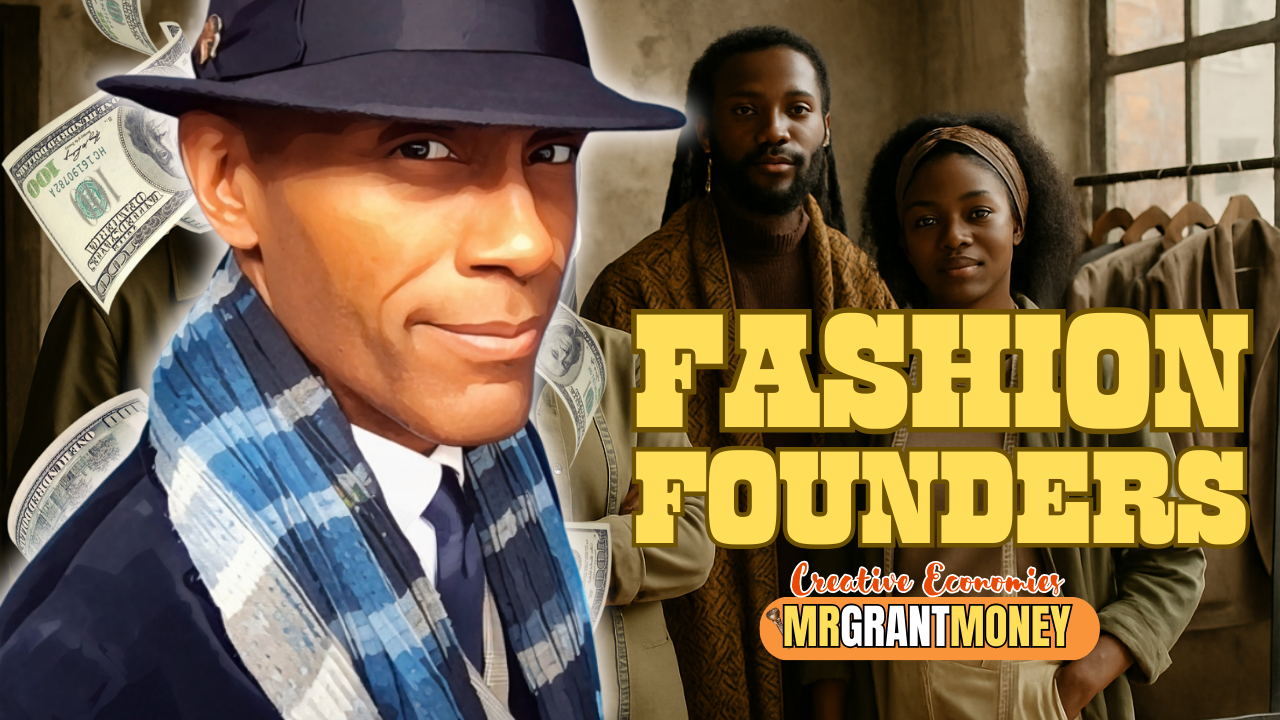
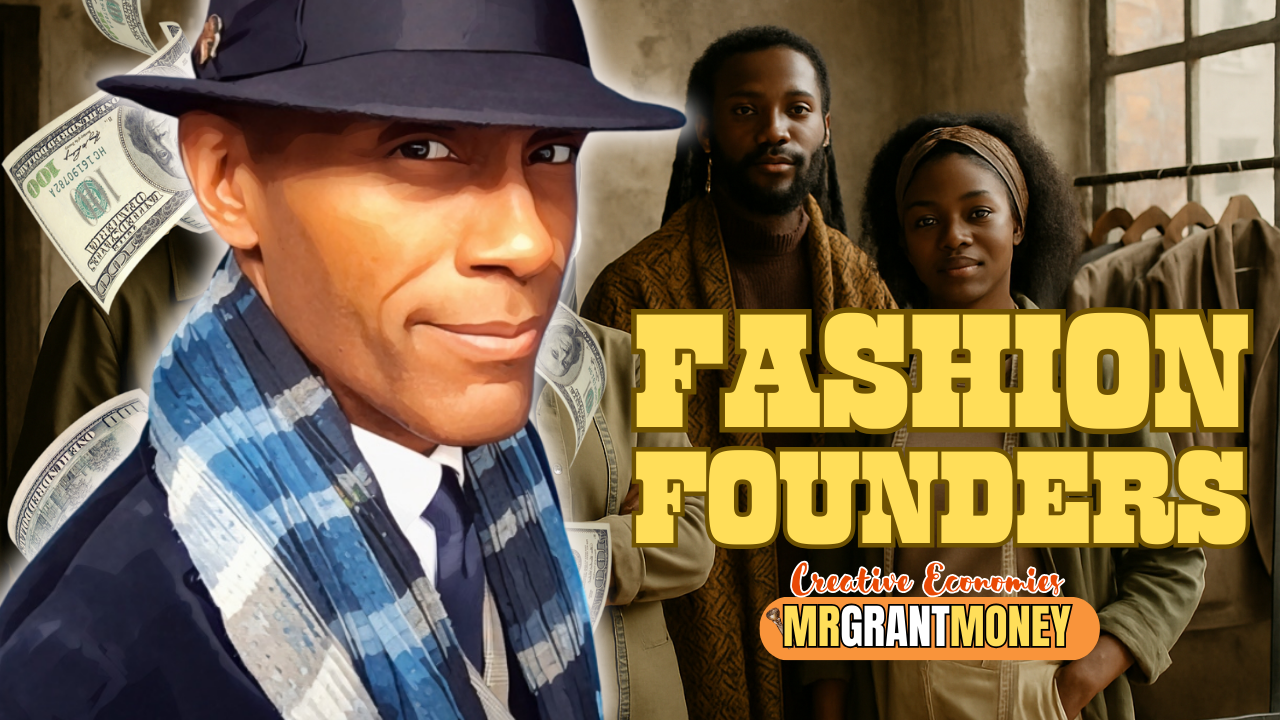
Wear Your Legacy: Mr. Grant Money & the Fashion Founders Fund in New York
 Fri, Oct 17
“Okay, I’ll admit it...”
I almost passed on this one.
The pitch deck was buried under a pile of proposals that smelled more like vanity than vision—startup fashion houses with loft-space dreams and no business model to match. But then I saw a handwritten note slipped between the pages:
“We stitch what the textbooks left out.”
That stopped me cold.
Because when a group of Afro-Caribbean seamstresses from the Bronx are building a fashion accelerator rooted in ancestral wisdom, textile justice, and economic sovereignty—and all they need is the right runway? You don’t walk past that. You show up in your best linen, ready to fund the revolution.
✊ When Style Is Survival
New York is the fashion capital of the world. But you wouldn’t know it walking through Brownsville or Flatbush.
While Fifth Avenue flaunts luxury behind armored glass, local creators are out here dodging evictions and sewing by flashlight during blackouts. Black, Brown, and immigrant designers have the talent, the taste, the textile traditions—but not the capital, contacts, or couture cachet.
For many, fashion isn’t a dream—it’s an inheritance. Grandmothers with hands like looms. Mothers who mended more than hems. Young folks sketching designs between caregiving shifts.
But here’s the rub:
The average designer of color in New York earns less than $25K a year. Most don’t get showroom invites, let alone seed funding. They’re told their culture is “too niche” while watching billion-dollar brands jack their motifs.
The industry loves the look—but not the lineage.
🧵 The Revolution Is Hemmed in Heritage
Enter the Fashion Founders Fund—a bold, community-rooted incubator launched by the legendary Laniyah Cruz, whose abuela was a dressmaker during Puerto Rico’s needlework boom and whose own streetwear line once sold out in 6 minutes on TikTok.
This wasn’t a vanity project.
It was a resurrection.
Laniyah partnered with Malik Owusu, a Ghanaian textile historian who runs fabric literacy workshops in Harlem barbershops, and Aleena Rafiq, a hijabi patternmaker who used to sew protest banners for mutual aid collectives. Together, they envisioned a space that did more than teach fashion—it restored legacy.
Their vision? A 12-month accelerator offering:
-
Free studio space in a converted firehouse
-
Monthly stipends for undercapitalized designers
-
Business mentorship rooted in cooperative economics
-
Workshops on everything from IP protection to ancestral dyeing techniques
-
A runway show that wasn’t about clout—it was about culture
They had talent. They had fire.
What they didn’t have? A funder who could speak fluent “foundation board” and “block party” in the same sentence.
🕶️ Enter the Stitch Whisperer
That’s where I came in—Mr. Grant Money, funding whisperer, cultural strategist, and, yes, proud son of a seamstress who used to hem dreams between night shifts.
I met the team at a popup in Bed-Stuy. Aleena was running a “Design Your Protest Tee” booth while Malik schooled teens on the colonial history of wax print. Within minutes, I knew: this wasn’t a fashion incubator. It was a cultural economy engine wrapped in style.
My grant radar lit up. I saw the puzzle pieces:
-
NEA Our Town grant for creative placemaking? Perfect.
-
Surdna Foundation’s Thriving Cultures portfolio? Check.
-
CDFI-backed microenterprise seed fund for fashion founders of color? Gold.
-
Local match from the NYC Department of Cultural Affairs? Let’s go.
💼 Sewing the Narrative, Selling the Vision
Now, passion is the thread—but strategy is the stitch.
We didn’t write a proposal. We curated a tapestry.
We led with data: Over 64% of NYC fashion students identify as BIPOC, but fewer than 10% of funded brands reflect that.
We highlighted economic impact: projected $1.6M in local commerce over 3 years, 70+ part-time jobs, and 18 full-time sustainable fashion businesses launched.
We spoke funder language—but in our voice. We framed this as infrastructure of inclusion, not a charity case.
And then came the killer line:
“This fund isn’t about fashion. It’s about who gets to shape what the world sees as beautiful—and profitable.”
They didn’t just approve it.
They asked how to wear the merch.
💥 Grant Drop. Culture Rise.
By spring 2025, the Fashion Founders Fund was real—and runway ready:
-
$1.8M grant pool secured across three sources
-
15 inaugural designers, all BIPOC and low-income, now receive $2,000/month living stipends
-
A reclaimed warehouse turned fashion lab with looms, sewing machines, dye stations, and a media hub
-
A fall showcase titled “Uncolonized Couture” that drew 2,000 attendees—and a deal with a major ethical retail partner
-
Ongoing residency swaps with designers from Ghana, Pakistan, and Jamaica
And the ripple?
-
Aleena’s protest tees are now a youth-led brand supporting mental health orgs
-
Malik’s textile archive is being digitized—with Smithsonian interest
-
And Laniyah? She’s opening a second incubator in the South Bronx—because one runway isn’t enough for a movement this bold
💡 Mr. Grant Money’s Wardrobe Wisdoms
Let’s keep it sharp and stitched:
-
Culture is capital. If it’s commodified without consent, it can be reclaimed with funding. Frame it as infrastructure, not identity fluff
-
Fund legacies, not logos. Flash fades. Lineage lasts
-
Pitch vision with receipts. Show how this changes lives—and markets
-
Bury the pity. Lead with power. These are designers. Creators. Founders. Not a cause
-
Design with dignity. If your grant narrative wouldn’t make your ancestors proud, rewrite it
Somewhere in Brooklyn, a kid is screenprinting their first hoodie in a kitchen that smells like sofrito and shea butter.
Somewhere in Harlem, an elder is passing down the pattern that saved her family through war, migration, and rent strikes.
And somewhere, another Laniyah is waiting for the chance to stitch her legacy into the world.
Let’s make sure she’s got the thread.
💬 5 Discussion Questions
-
What does “fashion as infrastructure” mean in the context of cultural equity and economic justice?
-
How can grantmakers better recognize the value of legacy-based creative work in marginalized communities?
-
What risks—and rewards—come with turning ancestral art into commercial enterprise?
-
Why is narrative so critical in winning grants for cultural projects like this one?
-
If you could design a creative incubator for your own community, what would it teach, fund, and showcase first?
🔓 UNLOCK EXCLUSIVE TIPS WITH MR. GRANT MONEY!
We hate SPAM. We will never sell your information, for any reason.