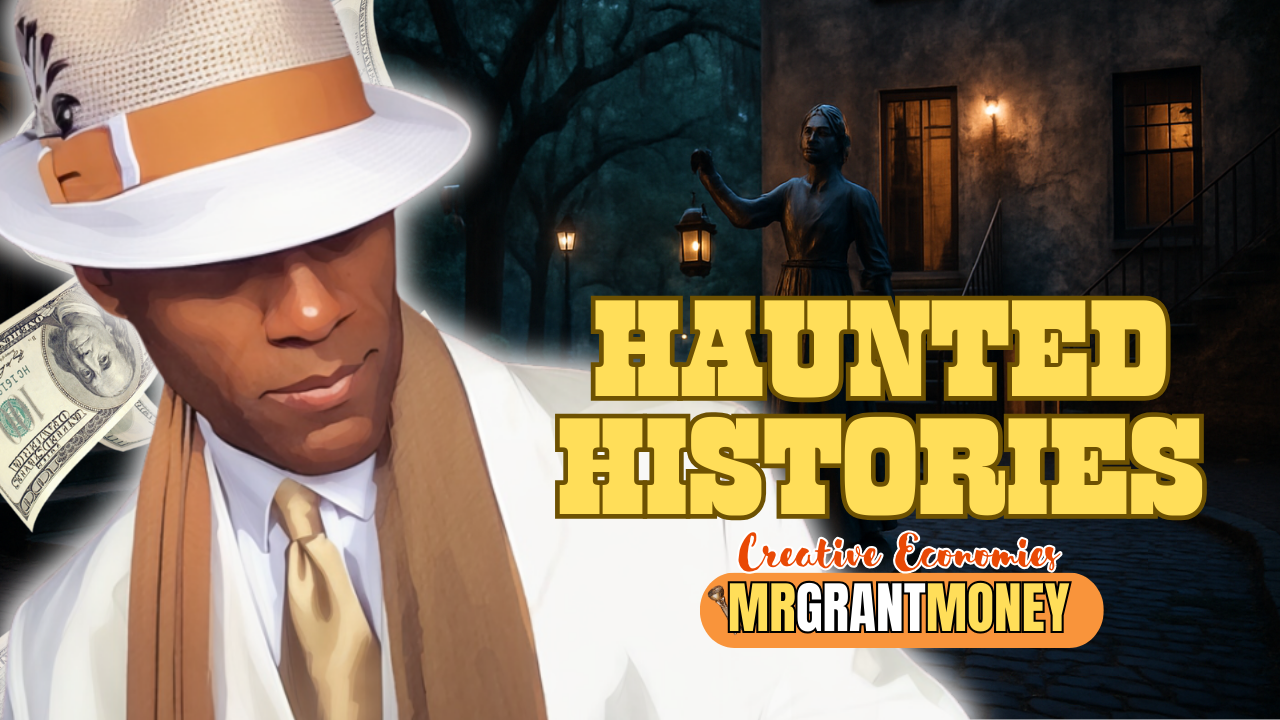
Haunted Histories: Mr. Grant Money & the Ghost Tour Theater Grant in Savannah
 Fri, Oct 31
“The dead don’t rest when the truth’s been buried with them.”
— old Gullah proverb, whispered more than written
👻 The Ghosts Were Profitable. The People? Not So Much.
Savannah, Georgia. Spanish moss. Cobblestones. Magnolia and memory.
Tourists flock to ghost tours. Millions flow in. But beneath the lantern-lit tales of haunted mansions and restless soldiers lies an older, often silenced truth:
-
Enslaved Gullah women who died in basements
-
Black soldiers buried without honor
-
Indigenous lands “cleared” without consent
Savannah’s cultural economy was booming—but profits weren’t reaching the descendants of the very stories being sold.
Then came The Midnight Curtain Collective:
A queer, Black, Gullah-descended theater troupe with a vision:
Take back the ghost story.
Make it theater.
Make it justice.
Make it pay everyone who kept the truth alive.
And when they needed help turning memory into money?
You know who they called.
🎭 The Vision Was Theatrical. The Mission? Revolutionary.
This wasn’t born in a boardroom.
It started in Cuyler-Brownville, behind a historic church. A pop-up ritual-performance blending spoken word, ancestral drumming, and oral history. The crowd wept. One grandmother whispered:
“I haven’t heard my mother’s language—Geechee—on a Savannah stage in 40 years.”
Leading this cultural insurrection:
-
Yemaya Blake – Rootworker, drama teacher, fired from a plantation tour for “going off script” (read: telling the truth)
-
Tariq Solomon – Lighting designer projecting migration maps onto cobblestones
-
Nina “Nine” Prince – Costume designer sourcing fabrics via oral tradition; every wardrobe was a cultural archive
Their dream?
A Ghost Tour Theater Series: immersive, site-specific, historically accurate performances that turned ghost stories into paychecks, platforms, and power.
They had vision. They had intergenerational truth.
What they didn’t have?
Enter: me. Fedora tilted. Notes in hand.
🕵🏽 When I Stepped Into the Story
A bootleg cemetery monologue clip. A candlelit backyard script reading. Yemaya channeling an enslaved midwife turned spirit guide.
This wasn’t art.
This was reclamation.
So we built a strategy to turn spirits into structure:
-
NEA – For community-based, site-specific theater
-
Surdna Foundation – For racial & cultural justice work
-
South Arts – Southern Cultural Treasures fund – For Black-led institutions in the South
-
Destination Savannah – The tourism board, ready to fund “legacy storytelling” (Translation: they needed us more than we needed them)
📄 Turning Spirits Into Strategy
The proposal?
🔥 Straight. Fire. 🔥
We framed the work as a “Historical Reclamation Theatre Series”, aimed at:
-
Revitalizing cultural districts
-
Employing Black creatives
-
Reclaiming erased narratives
-
Converting tourists into truth-tellers
We backed it up with:
-
Cultural tourism ROI data
-
Audience economic impact projections
-
QR codes linking to Nina’s costume mood boards
-
Audio from elders describing pre-gentrified Savannah
-
A sample monologue: a freedwoman guiding tourists through her own ghost tour
We hit every funder rubric:
Equity. Innovation. Local economics. Intergenerational preservation.
But we didn’t just check boxes.
We cracked them open.
💰 The Bag Dropped. The City Listened.
Here’s what came through:
-
💸 $180K NEA grant for performance production and artist stipends
-
💸 $120K from South Arts, officially naming the Collective a Southern Cultural Treasure
-
💸 $75K from Surdna Foundation, including leadership coaching and fiscal sponsorship training
-
💸 $50K “Truth Tourism” grant from the City of Savannah—the first ever awarded to a Black-led arts group
They staged six sold-out, site-specific performances:
-
Former slave quarters
-
A sugarcane dock
-
A Freedmen’s cemetery
-
A historic Black church nearly turned into condos
Youth ran tech. Gullah elders were credited as script consultants.
Tourists left with tears, t-shirts, and a new definition of “haunted.”
🎯 Grant Game Codes from the Spirit World
If you're sitting on sacred stories, don't wait to be funded.
Here’s how we brought Savannah’s ancestors back to center stage:
1. Don’t Just Haunt—Heal
Ghost stories are marketable.
But healing is transformative.
Tell the truth, not just the tale.
2. Map Culture to Capital
Track how art moves money:
-
Foot traffic
-
Local spend
-
Tourism retention
Cultural preservation IS economic development.
3. Turn Ancestors Into Stakeholders
Name them. Quote them. Pay them.
Funders want legacy—especially when it breathes.
4. The Story Is the Strategy
Build proposals that speak in voice clips, costume photos, rehearsal videos.
Make them feel your stage before they fund it.
5. Own the Narrative, Own the Terms
If someone else controls the history,
they’ll control the budget.
Write your worth.
Savannah is still haunted.
But now the spirits speak with the people who remember them—and profit flows through truth-telling, not ghost mimicry.
And if your city's sitting on untold stories?
You know who to call.
Mr. Grant Money answers when the ancestors whisper.
💬 Discussion Questions
-
How can storytelling reshape the tourism economy in historically oppressed communities?
-
What role should ancestry and cultural memory play in funding arts initiatives?
-
How do we ensure that cultural tourism dollars benefit the communities that built the culture?
-
What makes site-specific theater uniquely powerful in reclaiming history?
-
How would you reimagine your city’s ghost stories if the truth were center stage?
🔓 UNLOCK EXCLUSIVE TIPS WITH MR. GRANT MONEY!
We hate SPAM. We will never sell your information, for any reason.