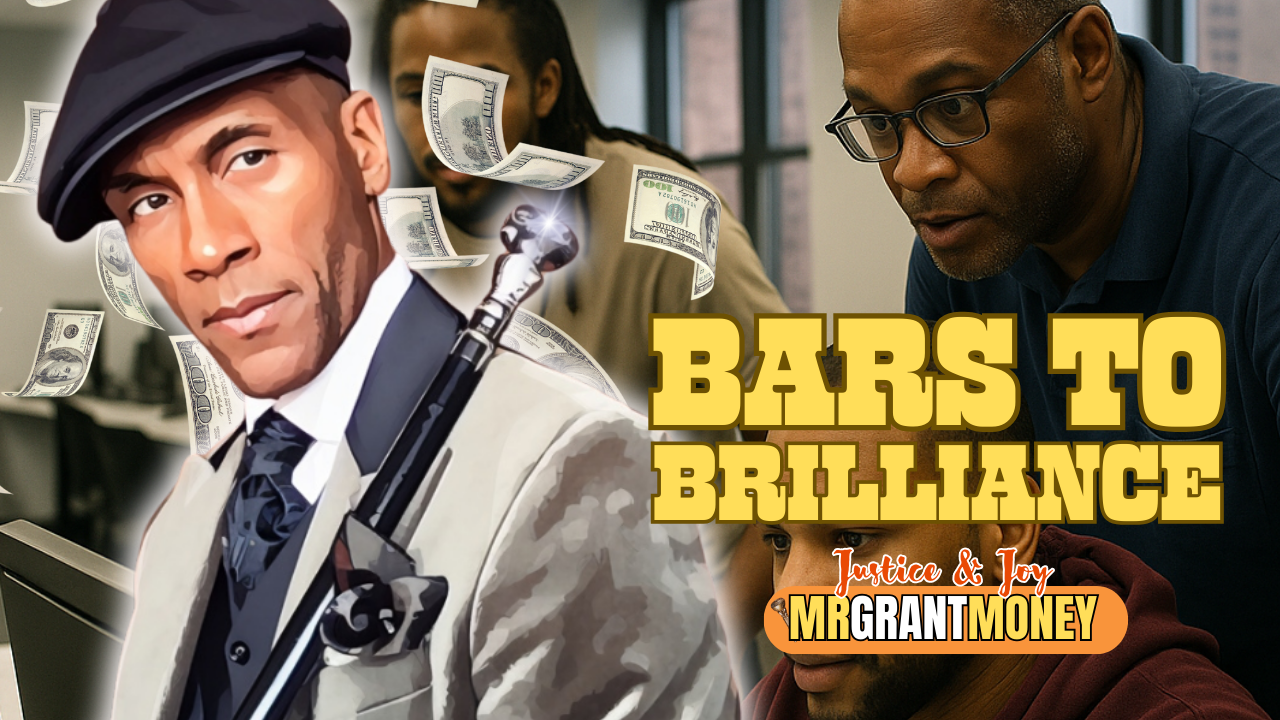
Stage Lights & Second Chances: Mr. Grant Money & the Prison Theatre Program in Texas

 Mon, Oct 13
“You’ve got five minutes to convince the jury.”
That was the deal. Not in a courtroom. On stage. The audience? A mix of correctional staff, volunteers, and fellow inmates.
The script? Loosely based on Shakespeare’s Julius Caesar, but remixed with prison slang, spoken-word monologues, and a gospel interlude. The actor? 22-year-old Malik, serving a ten-year sentence for armed robbery. His opening line?
“Y’all ever feel like the bars are just the closing credits to a movie you didn’t even write?”
That night wasn’t about freedom papers. It was about power—creative, raw, redemptive power. And it lit a fuse under a prison system built on punishment but starving for possibility.
🎬 When the System Steals the Story
Texas has the largest incarcerated population in the country. Over 120 state prisons. Tens of thousands of inmates. And until recently? Almost zero funding for rehabilitative arts programs.
Here’s the real cost:
🧠 Mental health issues skyrocket behind bars
📚 Educational and creative programming? Almost nonexistent
🚪 76% of formerly incarcerated Texans end up unemployed one year after release
🧱 Reentry programs focused solely on jobs ignore what trauma leaves behind—identity wounds, shame spirals, and disconnection from purpose
But a group of artists—some formerly incarcerated themselves—decided that prison walls shouldn’t be creativity-proof. They founded Second Stage, a theatre collective working inside correctional facilities to teach acting, playwriting, stagecraft, and healing through performance.
They called it “restorative dramaturgy.”
Prison staff called it “unnecessary.”
Funders? They didn’t even have a line item for it.
Until Mr. Grant Money pulled up with a director’s chair and a vision.
🎩 Mr. Grant Money’s Most Unexpected Audition
He first heard about Second Stage while reviewing a stack of reentry proposals in Austin. One line caught his eye:
“We don’t just reduce recidivism—we raise curtain calls.”
He drove four hours to the facility in Beeville, Texas. No fedora this time—just a clipboard, wraparound shades, and a bag of trail mix he offered to the warden like it was legal tender.
He sat through a rehearsal of Antigone in Lockdown, rewritten to echo the solitary confinement experience. Halfway through a scene, he scribbled something down and nodded like he’d just solved a funding equation.
“They’re not inmates. They’re artists mid-residency. This is a creative economy pipeline—hidden in plain sight.”
🖋️ How to Write a Proposal When the Stage Is a Cellblock
Mr. Grant Money doesn’t just fund programs. He rebrands narratives. For Second Stage, he drafted a proposal that turned every barrier into a grantmaker’s buzzword.
📊 He framed it as a recidivism-prevention model powered by narrative therapy
📈 Cited stats: 45% lower reoffending rates in programs with arts engagement
🎯 Highlighted economic impact: returning citizens trained in theater tech were earning 4x more than peers with only GEDs
🎭 Called it: “Stagecraft for Second Chances: A Scalable Arts-in-Justice Framework”
But the clincher? A two-minute video of Malik, performing his final scene in front of his mother—her first time seeing him outside visitation glass in five years.
“I’m not asking you to forgive me,” he said. “I’m asking for one chance to rewrite my ending.”
It went viral in grantmaker circles. One funder reportedly wept in a review panel meeting.
🏛️ And Then the Curtains Rose
The win came fast—and big:
💰 $2.7M from a national foundation investing in art as abolition
💼 $900K from Texas’ first-ever Creative Reentry Fund
🖥️ $1.5M from a surprise tech philanthropist who saw the video and called it “the future of rehabilitation”
What did it unlock?
🎭 A full-time, trauma-informed acting and directing curriculum across five prisons
🪛 Certification programs in set design, lighting, and sound production
📺 A partnership with PBS to livestream performances inside and out
💼 A transitional job pipeline to regional theaters for returning citizens
🎫 “Tickets for Tomorrow” – a program where community members can attend inmate performances and write letters of encouragement post-show
Within 6 months:
-
320+ incarcerated artists had taken the stage
-
40+ returning citizens found jobs in the arts
-
One even started his own nonprofit theatre company
And Malik?
He earned early release. And today? He’s directing Macbeth in Motion—his own adaptation for teens in juvenile detention.
🎙️ Mr. Grant Money’s Backstage Lessons
Here’s what the strategist-slash-director whispered as the curtains fell:
-
If the system strips identity, give people a stage to reclaim it
-
Don’t sell your art short—sell the full ecosystem: jobs, healing, audiences
-
Make the story the data. Funders will follow the feelings if the facts are sound
-
Pitch performance as public safety. Transformation is cheaper than punishment
-
Art behind bars isn’t radical. It’s restorative. And it’s overdue
A prison is not where stories end.
Sometimes, it’s where they finally begin.
And Mr. Grant Money? He’s headed to a women’s facility next.
Rumor is, they’re adapting The Color Purple with original gospel numbers.
He’s bringing front-row seats and fresh funding frameworks.
💬 Discussion Questions
-
How can storytelling shift public perception about people who are incarcerated?
-
Should performance art be funded as part of justice reform? Why or why not?
-
What barriers exist for returning citizens in the creative workforce—and how do we break them?
-
How can arts programs in prison prepare people for leadership, not just survival?
-
If you could bring one story to life on a prison stage, what would it be—and why?
🔓 UNLOCK EXCLUSIVE TIPS WITH MR. GRANT MONEY!
We hate SPAM. We will never sell your information, for any reason.