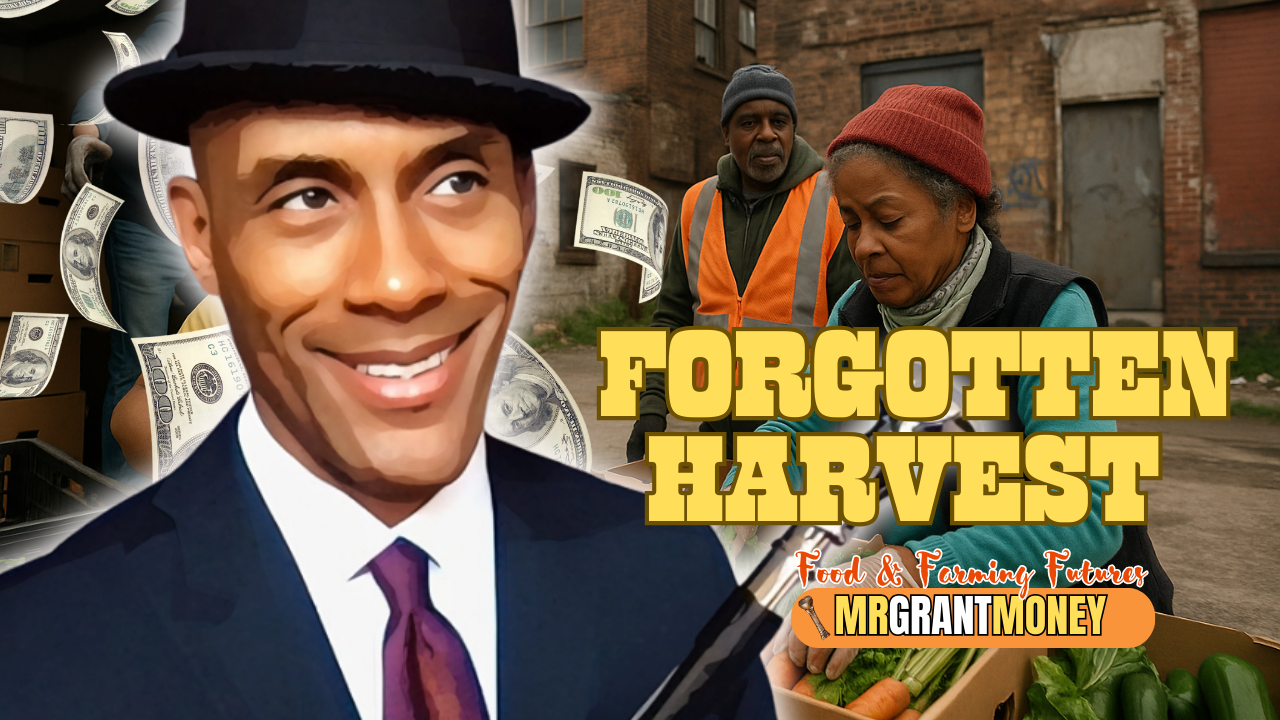
The Forgotten Harvest: Mr. Grant Money & the Food Rescue Brigade in Detroit
 Fri, Nov 28
Detroit is a refrigerator with the door wide open—stuffed with abundance in some corners, completely empty in others.
Food gets tossed by the ton in some ZIP codes, while two blocks over, folks are boiling hot dogs over space heaters and rationing canned beans. It’s a broken ecosystem: overstocked shelves in stores that don’t deliver, restaurant dumpsters full of untouched bread, school cafeterias with leftover apples—while thousands go to bed hungry.
It’s not that there’s no food in Detroit. There’s food everywhere. What’s missing is connection. What’s missing is access. What’s missing is justice.
And in that brokenness, a group of organizers, chefs, truck drivers, and ex-grocery workers decided to build something radical from the scraps: The Food Rescue Brigade.
Rot on One Side, Hunger on the Other
In a city with the highest rate of food insecurity in the Midwest, the injustice is almost architectural. In Detroit’s most underserved neighborhoods—like Dexter-Linwood and Chandler Park—you’ll find liquor stores every few blocks but no produce aisles for miles.
Meanwhile, just across the highway, supermarkets over-order and throw out perfectly edible food by the pallet. Bakeries overbake. Schools overcook. Nonprofits overstock pantries with stuff people don’t eat. And all of it? Headed to landfills.
It’s a system designed for waste.
Detroit doesn’t have a food supply problem. It has a food equity problem. And in a city already reeling from systemic disinvestment, environmental racism, and housing loss, the last thing people should have to fight for is dinner.
The Crew That Said, “Enough”
It started with a busted van, three volunteers, and a neighborhood WhatsApp group. Zariah, a chef who grew up on 8 Mile and got tired of watching entire trays of catered food get trashed at events. Tony, a former delivery driver who knew where the grocery store managers would “quietly” look the other way. And Miss Deedee, a retired nurse with a side hustle feeding unhoused folks with whatever she could scrape together.
Together, they started scooping up good food that was being thrown out, sorting it in a garage, and texting families to come by.
They weren’t a nonprofit. They weren’t a government program. They were a crew with coolers, carts, and a commitment to feed their people.
They called themselves The Food Rescue Brigade.
By the time I showed up, they were moving over 2,000 pounds of food a week—with no funding, no staff, and no official permission.
Mr. Grant Money Rides Shotgun
I met them behind an abandoned hardware store at 7:00 a.m. sharp. Zariah was directing traffic like a drill sergeant, stacking crates of produce in the back of a borrowed pickup while someone inside prepped black bean chili from rescued cafeteria beans.
“Don’t get it twisted,” she told me, wiping sweat off her forehead. “This ain’t charity. This is logistics. This is public health. This is reparations in motion.”
I knew then: this wasn’t just a passion project. It was a scalable, fundable solution to urban food apartheid.
But what they needed now wasn’t more hustle. It was infrastructure. Refrigerated trucks. A digital inventory system. Safe storage space. A mobile kitchen. A community employment pipeline. It was time to make this movement un-ignorable.
So we got to work—with a grant acquisition strategy worthy of their grind.
The Proposal That Turned Trash Into Treasure
We built a funding strategy with layers—just like their food.
We showed funders how the Brigade reduced food waste, tackled chronic hunger, created green jobs, and reduced carbon emissions all at once. We made it impossible to dismiss. You want climate justice? Check. Workforce development? Check. Racial equity? Check. Community health? Check. Compost? You better believe it.
And we didn’t sand down the story. We leaned into it.
We told the truth about how Miss Deedee feeds three entire blocks without ever calling herself a hero. How Tony taught a group of high schoolers how to build a shelf-stable meal kit using only “rescued” ingredients. How Zariah convinced a Michelin-star chef to donate their food waste and volunteer every Sunday.
We called the proposal:
"The Forgotten Harvest: A Circular Food Justice Infrastructure for Detroit."
When the Grant Hit, the Trucks Rolled
We landed $450K from the USDA's Community Food Projects Competitive Grant. Then came $250K from a private climate philanthropy fund. A local food innovation accelerator added another $100K. The city kicked in some matching funds. And a cold chain company donated a refurbished walk-in fridge.
In less than a year, The Food Rescue Brigade:
-
Built a distribution hub in an old warehouse near Eastern Market
-
Launched a mobile meal service feeding 300+ people a night
-
Created 14 paid jobs—most for youth and returning citizens
-
Developed an app that tracks donations, delivery routes, and nutritional breakdowns
-
Partnered with two schools to launch food rescue clubs that teach students food systems and nutrition
-
Turned waste into wealth by composting unusable food into fertilizer for nearby urban farms
And the most powerful shift? They created dignity-centered nourishment. Families could choose what they wanted. Menus included cultural foods. Meals were delivered without shame. And the Brigade wasn’t just feeding people—they were reclaiming the city’s broken food web.
Mr. Grant Money’s Harvest Notes from the D
📦 “Don’t let the funder tell you food rescue isn’t infrastructure.”
If Amazon can fund logistics for toothbrushes, we can fund logistics for tomatoes. Food waste is a system failure—treat the fix like critical infrastructure.
🥘 “Community cooks know more than most food policy experts.”
Let them lead. Fund their kitchens, their calendars, their crews.
🌱 “Sustainability doesn’t mean solar panels. It means staying power.”
Build funding around what keeps the movement going: trucks, stipends, safety nets, rest.
📲 “Tech is not the enemy—if we own it.”
Digital tools can help food justice scale. Just make sure the data stays in the community’s hands.
🔥 “Start with what’s rotting. Build from there.”
If the system tosses it, transform it. That’s food justice alchemy.
💬 Discussion Questions
- What would it take to make “zero waste” the norm, not the exception, in your city?
- How do we build food systems where dignity, not scarcity, leads?
- Who’s already solving food injustice on your block—and how are we funding them?
- What happens when we treat “expired” food as just the beginning?
- What systems are designed to discard people—and how do we compost them into something new?
🔓 UNLOCK EXCLUSIVE TIPS WITH MR. GRANT MONEY!
We hate SPAM. We will never sell your information, for any reason.