Food for the Future: Mr. Grant Money & the Edible STEM Labs in Philadelphia
 Fri, Nov 21
Grow the Block, Feed the Future: Mr. Grant Money & the Edible STEM Labs of Philly
🎶 “Ain’t no sunshine when she’s gone…”
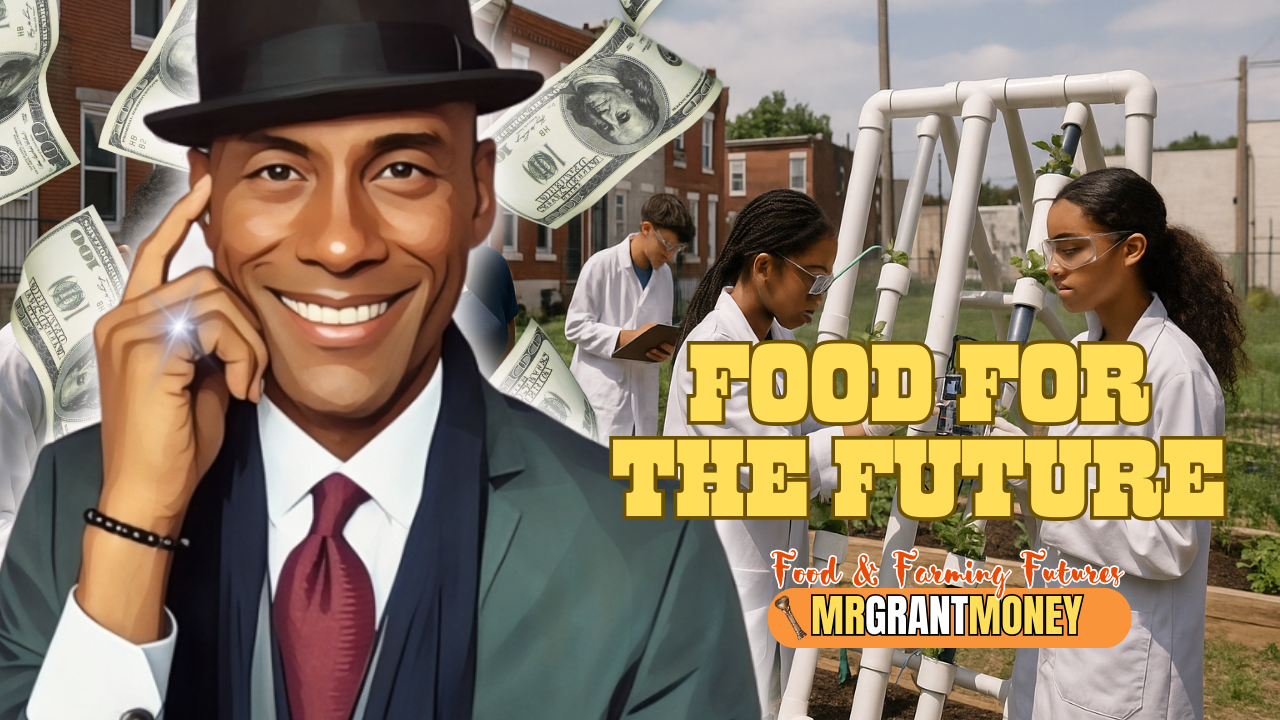
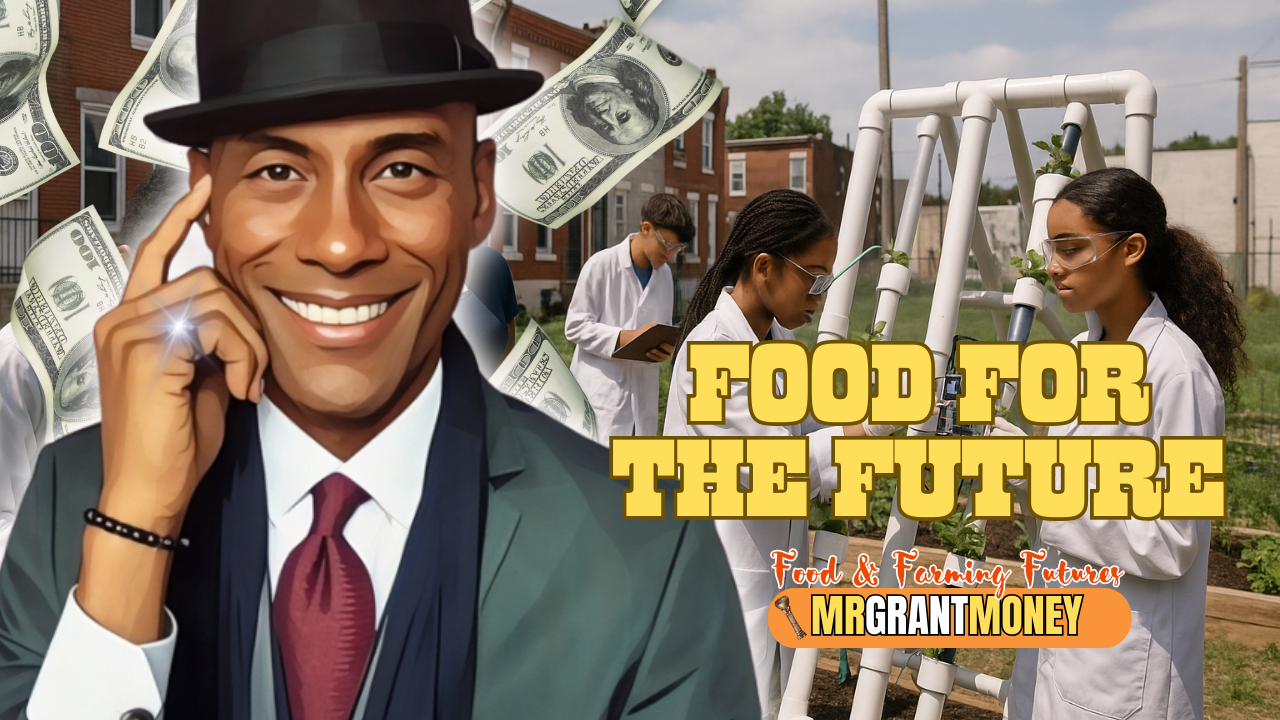
The voice drifted from a cracked window on North 29th Street, mixing with the scent of basil and sweat. Ms. Deja hummed along, the hose slung over her shoulder like a badge of honor as she watered sweet potatoes growing in old paint buckets. Around her, teenagers in lab coats twisted wires, checked water pH levels, and debated whether bok choy or butter lettuce would yield faster in their homemade hydroponics rig.
This wasn’t your typical science class. And this definitely wasn’t your typical schoolyard.
Once an illegal dumping site, the lot had transformed into a full-blown Edible STEM Lab—a fusion of food, tech, and tenacity born from the soil of struggle. On this block, where access to fresh produce was a luxury and public schools were under constant threat of cuts, the sun wasn’t just shining today—it was growing food, growing futures, and growing power.
The Empty Fridge That Sparked a Food Rebellion
The idea didn’t come from a policy meeting or nonprofit roundtable. It came from a question Deja couldn’t ignore: Why should kids learn photosynthesis from a textbook when they could grow their own food and test it in real-time?
Deja had taught high school biology in Philly for eight years. She saw the cuts—first to field trips, then lab supplies, and eventually entire science departments. Meanwhile, her students were showing up hungry. Some were living in motels. Others were caregivers for younger siblings. Many had never stepped foot in a grocery store with fresh greens.
The problem wasn’t just food access. It was opportunity. It was imagination. And it was rage.
Deja didn’t want to start a garden. She wanted to start a revolution. One rooted in food justice and educational equity.
From Backyard Hacks to Block-Wide Dreams
Word spread fast. Mama Amina, a retired nurse and herbalist, came by to teach kids the difference between comfrey and collards. A welder named Sean donated materials for raised beds. Teen coder Jaelyn joined after class and built a basic soil sensor with spare circuit boards.
Before long, the lab was more than a lab—it was a magnet. Students who’d never passed a science test started designing aquaponics systems. Parents dropped off compost. Neighbors brought seeds. And everyone, for the first time in a long time, felt like they were part of something that could actually last.
But the more they built, the more they realized: passion wasn’t enough. If they wanted to expand—add a rooftop greenhouse, build an indoor lab space, offer paid internships, and replicate this on other blocks—they needed funding. Not a bake sale. Not a one-time prize. Real money. Sustainable money.
So they called me.
Mr. Grant Money, Reporting for Duty
I met Deja in a community center kitchen, where she was slicing beets for a student-run pop-up dinner. She didn’t bother with small talk.
“We don’t want to be a pilot project,” she said. “We want to be permanent.”
That was music to my ears.
This wasn’t charity work—it was infrastructure. A food system, STEM curriculum, public health intervention, and workforce pipeline rolled into one. And the data was already speaking for itself: students were attending class more often, eating healthier, getting certified in tech and food safety, and dreaming bigger than anyone had given them permission to.
So we got to work.
Writing a Proposal with Roots and Fire
We didn’t just write about garden beds and lesson plans. We wrote about kids who went from failing biology to leading composting workshops for City Council staffers. We wrote about Deja’s dream of turning abandoned rooftops into solar-powered microfarms and classrooms. We wrote about the taste of the first homegrown strawberry one student called “the best thing I’ve ever eaten in my life.”
We framed the Edible STEM Lab not as a program, but as a model for urban renewal—rooted in youth innovation, climate education, and block-level power.
The proposal was gritty, grounded, and bursting with impact—health, education, environment, economics. But more than that, it felt like a rallying cry. The kind of story funders couldn’t forget.
The Day the Sun Came Up Over Philly
The awards came in waves.
🌱 USDA Urban Ag Innovation Grant – scaled the lab to three more lots
🔬 NSF STEM Equity Grant – formalized tech training modules
🔋 Private tech partner – solar panels and Arduino-based kits
🌎 EPA Environmental Justice Mini-Grant – paid youth interns to conduct neighborhood soil studies
With that money, they built a rooftop greenhouse. Launched a seed library curated by elders. Started a mobile kitchen classroom. Students began presenting research at regional science fairs—and winning.
One year later, the Edible STEM Lab was no longer a local miracle. It was a replicable blueprint for other cities.
Mr. Grant Money’s Harvest Notes: From Philly, With Grit
You want to fund the future? Fund the kids already building it. Here’s what this city taught me:
🥬 Innovation doesn’t require MIT—sometimes just a bucket and basil.
📖 Outcomes get you funded. But stories? They get you remembered.
🌎 You don’t have to choose between climate, food, and education. Build projects that braid them.
🚫 Stop waiting for permission. Start writing your own infrastructure.
Want to know how I turned their strawberry dreams into federal funding? Start with this grant starter kit.
💬 Questions to Keep the Conversation Growing
-
What would your neighborhood look like if every empty lot was a science lab and a salad bar?
-
How can youth-driven innovation reshape how we think about infrastructure?
-
Who holds the knowledge in your community that classrooms haven’t recognized yet?
-
What does funding equity look like in a world where every student deserves sunlight, soil, and support?
-
What would happen if we treated education like nourishment?
🔓 UNLOCK EXCLUSIVE TIPS WITH MR. GRANT MONEY!
We hate SPAM. We will never sell your information, for any reason.